Choosing a training room isn’t just about finding four walls, enough chairs and a screen at the front of the room.
If you’re organising a workshop, course, seminar or learning session, the venue becomes part of the experience. It affects how people arrive, how comfortable they feel, how focused they are and how easily the day runs.
For attendees, the experience often starts long before they walk into the room. It starts with the journey, the parking, the public transport options, the stress of getting there on time and the practical question of whether the location feels easy enough to commit to in the first place.
That’s why choosing a training venue should never be treated as an afterthought.
Start With The Attendee Experience
When someone books onto training, they’re giving up time, energy and often part of their working day. If getting to the venue is awkward, expensive or unclear, that can affect how they feel before the session even begins.
Traffic, parking and public transport are not small details. They can be the difference between someone arriving calm and ready to learn or arriving rushed, frustrated and distracted.
Before booking any training space, it’s worth asking:
- Is there parking nearby and is it free or paid?
- Is the venue easy to reach by public transport?
- Are the directions clear for people who don’t know the area?
- Will attendees understand where to go when they arrive?
- Is the venue accessible for people with mobility needs or hidden disabilities?
At Jennymount Business Park, this is something the team sees regularly. Organisers want a space that feels professional without creating the extra pressure often associated with city centre venues.
With free parking, Yorkgate train station around an eight-minute walk away, nearby bus routes and access close to the M1 and M2 motorways, the practical journey is one of the first things people consider when looking at the training space.
Think About The Room Before You Think About The Date
A room can look suitable on paper and still be wrong for the kind of training you’re delivering.
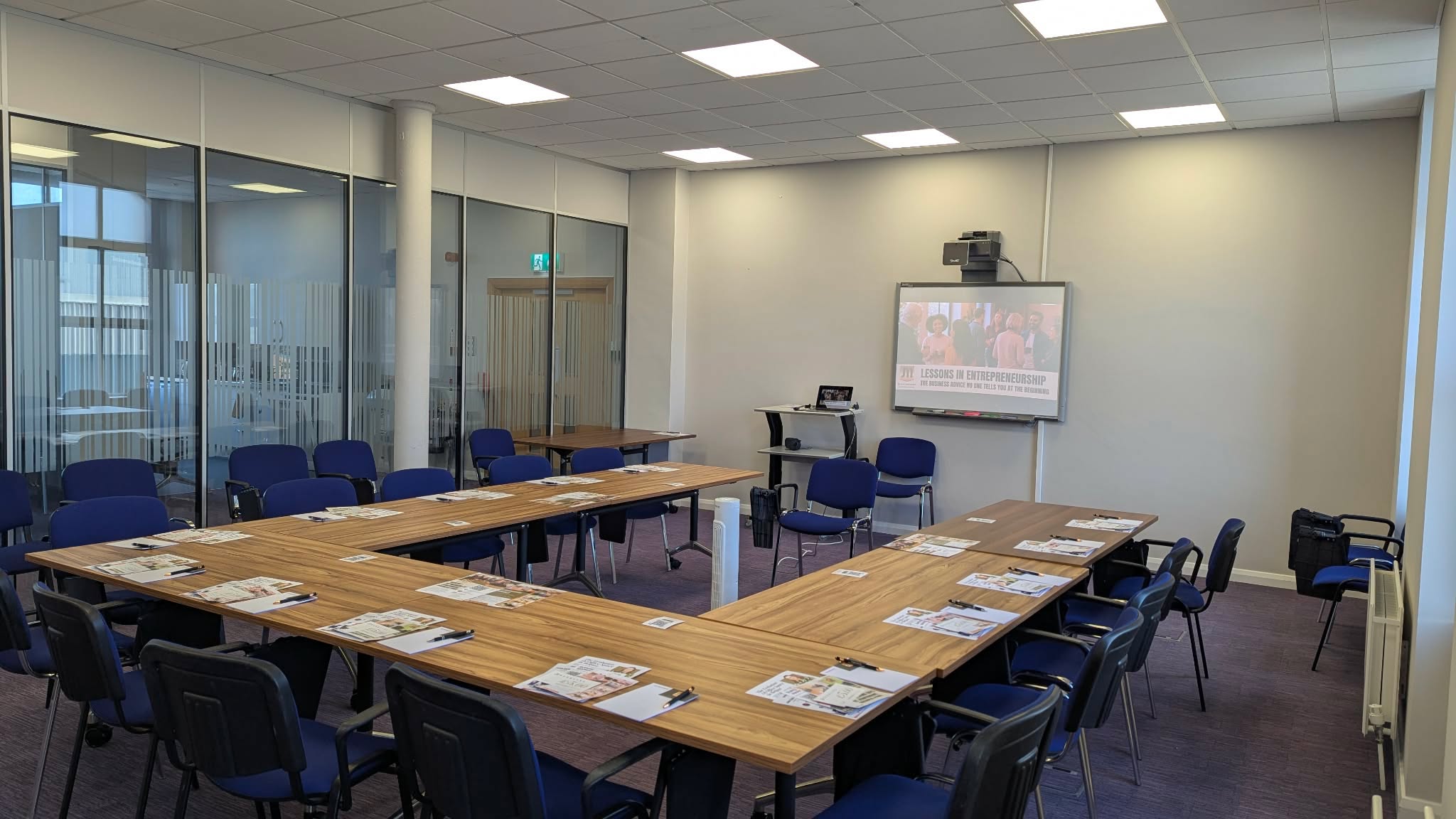
The layout matters. A classroom-style setup may work well for structured learning, while a more open arrangement might suit discussion, group exercises or interactive sessions. If your training involves breakouts, demonstrations or hands-on activity, you’ll need to know whether the room can support that comfortably.
It’s useful to be clear about how many people will attend, how much movement the session requires and what the trainer needs at the front of the room. A space that technically fits 30 people may not feel comfortable once bags, coats, laptops, flipcharts and refreshments are added.
Good training rooms should support the style of the session, not work against it.
Comfort Affects Concentration
It’s easy to underestimate the effect of lighting, temperature and seating until something goes wrong.
A room that is too warm, too cold, too dark or physically uncomfortable can make it harder for people to concentrate. For full-day training, this becomes even more important. Learners need to be able to listen, take notes, ask questions and stay engaged without being distracted by the environment.
Before booking, ask about natural light, heating, ventilation, seating and room setup. These aren’t luxury details. They help people get the best from the session.
Check The Tech Before The Day
Most training sessions rely on some level of technology, whether that’s a laptop, screen, projector, sound, Wi-Fi or online access.
The problem is people often assume the technology will work in exactly the way they need it to. That’s not always the case. Connections, adapters, passwords, sound levels and screen sharing can all cause delays if they haven’t been checked in advance.
A simple tech check before the event can remove a lot of pressure from the trainer. It also gives the venue team time to confirm what’s available and what the organiser may need to bring.
If your session depends heavily on slides, video, audio or live demonstrations, don’t leave the technical details until the morning of the event.
Don’t Make Assumptions About What’s Included
One of the most common mistakes when booking a training room is assuming certain things will be included.
Refreshments are a good example. Tea and coffee may be included in some venues but charged separately in others. Alternative milks, herbal teas, biscuits, water or lunch arrangements may all need to be confirmed in advance.
The same applies to equipment, room setup, signage, access times and support on the day. Always ask what is included, what costs extra and what needs to be requested before the booking is confirmed.
It’s better to ask a basic question early than discover a problem when attendees are already in the building.
Accessibility Should Be Planned, Not Reacted To
Organisers won’t always know the full needs of everyone attending. Some people may have mobility requirements. Others may have hidden disabilities, sensory needs, anxiety around travel or dietary requirements.
Good planning means thinking about those things before someone has to ask.
That includes checking parking, lift access, toilets, public transport links, room layout, food options and the clarity of joining instructions. It also means giving attendees the opportunity to tell you about anything they need in advance.
This isn’t just about compliance. It shows care and helps create a better learning environment for everyone.
Visit The Space Where You Can
Photographs, floor plans and descriptions are useful, but they don’t always tell the full story.
Seeing the space in person helps you understand how the day will work. You can check where attendees will enter, where refreshments will be served, where toilets are located, how the room feels and what support is available from staff.
It also gives you a chance to plan the small but important details: where the trainer will stand, where people will sign in, where materials will go and how attendees will move around the building.
Jennymount’s training room is located on the second floor of the historic Lanyon Building, one of Belfast’s beautiful linen buildings. For many organisers, visiting the space before booking helps them understand how the room, access, parking and facilities will work together on the day.
Choose A Venue That Reduces Friction
The right training room won’t do the work for you, but it can make the day easier to deliver.
A good venue helps reduce friction. It makes arrival easier, supports the trainer, keeps attendees comfortable and removes avoidable distractions. It gives the organiser fewer things to worry about and gives participants a better chance of staying focused on the learning.
If you’re planning training, don’t choose the room only on price or availability. Think about the full experience from the attendee’s point of view.
To find out more about the training space at Jennymount Business Park or to arrange a short tour, email jennymountbusinesspark@outlook.com or call 028 90 992 998.